
Ovulation vs. Luteal Phase: Why You Feel So Different (And How to Adapt)
By Snny | October 21, 2025 | 6 min read
📌 Key Takeaways
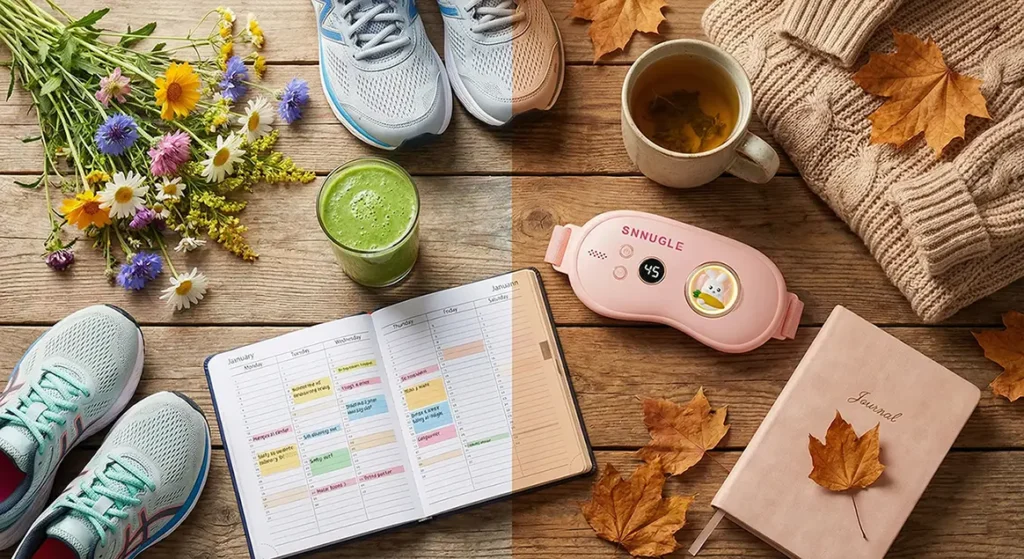
- The “Inner Seasons”: Think of Ovulation as your inner “Summer” (high energy, outgoing) and the Luteal Phase as your inner “Autumn” (slowing down, turning inward).
- Estrogen’s Peak: During ovulation, estrogen is at its highest, giving you a boost in mood, energy, and libido.
- Progesterone’s Rise: In the luteal phase, progesterone takes over. It has a natural sedative effect, which can make you feel sluggish, foggy, or bloated.
- The Crash: The sharp drop in hormones right before your period (late luteal) is what triggers PMS symptoms.
- Adapt, Don’t Force: Snnugle is your essential tool for the luteal phase, providing the warmth and comfort needed when your body asks you to slow down.
 Table of Contents
- The Tale of Two Hormones: Estrogen vs. Progesterone
- Ovulation: Your “Superwoman” Window (Inner Summer)
- The Luteal Phase: The Great Winding Down (Inner Autumn)
- How to Adapt Your Life to Your Cycle (Cycle Syncing Basics)
- Snnugle: Your Luteal Phase Support System
- FAQ: Cycle Phases
- Conclusion
Introduction
Do you ever feel like you are two different people living in the same body? One week you are crushing high-intensity workouts and socializing until late; the next, you just want to cancel everything and curl up on the couch. You aren’t crazy, and you aren’t inconsistent. You are simply cyclical. The dramatic shift between ovulation and the luteal phase is biology at work. Let’s decode why you feel so different and how to work with your changing tides, not against them.
The Tale of Two Hormones: Estrogen vs. Progesterone
Your cycle is governed by a dance between two main hormones. How you feel depends entirely on who is leading the dance.
- Estrogen: The “energizer bunny” hormone. It boosts serotonin (the happiness chemical) and dopamine (the reward chemical).
- Progesterone: The “chill pill” hormone. It has a mild sedative effect designed to calm the body in preparation for a potential pregnancy.
Ovulation: Your "Superwoman" Window (Inner Summer)
Occurring roughly around day 14 of a 28-day cycle, ovulation is the main event.
- How it feels: Estrogen hits its peak. You likely feel your most confident, articulate, and energetic. Your skin glows, your libido is higher, and you handle stress better.
Best for: Big presentations, first dates, intense HIIT workouts, and social gatherings.
The Luteal Phase: The Great Winding Down (Inner Autumn)
Immediately after ovulation, the luteal phase begins and lasts until you bleed (approx. days 15-28).
- How it feels: Estrogen drops sharply, and progesterone begins its long climb. The energy boost fades, replaced by a more inward, slower pace. You might feel brain fog, bloating, breast tenderness, and a lower social battery.
- The PMS Danger Zone: In the last few days of this phase, both hormones crash. This sudden withdrawal is what causes classic PMS symptoms like irritability and anxiety.
How to Adapt Your Life to Your Cycle (Cycle Syncing Basics)
Stop expecting yourself to perform at an “ovulation level” every single day.
- During Ovulation: Push yourself. Lift heavier weights, schedule important meetings, stay out later.
- During Luteal Phase: prioritize recovery. Switch to Pilates or walking. Meal prep so you don’t rely on takeout when energy is low. Clear your social calendar in the final days before your period.
Snnugle: Your Luteal Phase Support System
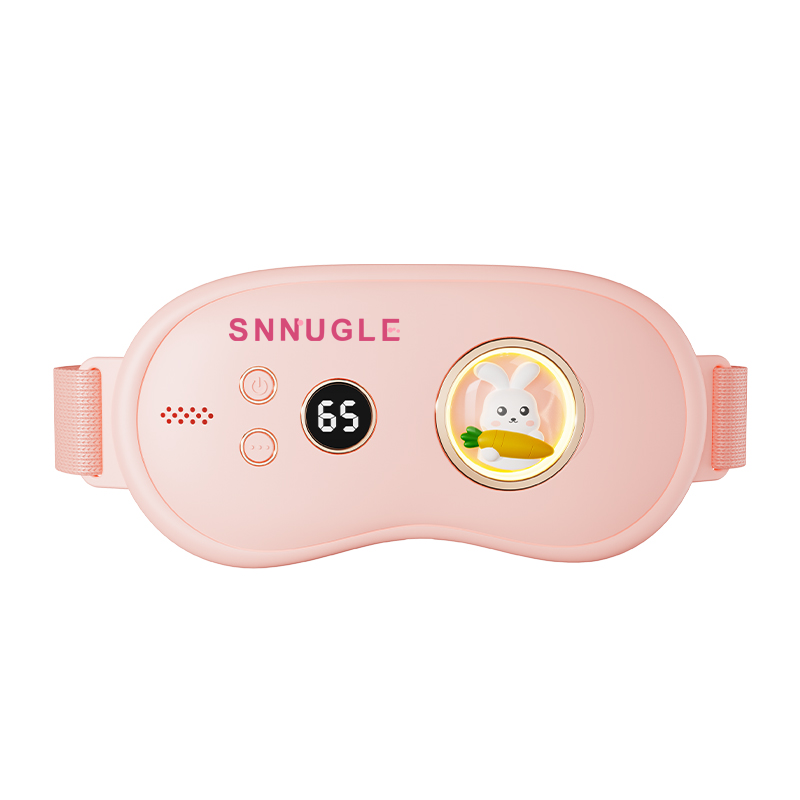
The luteal phase is when your body begins to ask for extra care. As progesterone causes bloating and the impending hormone crash triggers pre-menstrual cramping, heat becomes essential. Using your Snnugle Warmer during this phase is proactive self-care. The gentle warmth increases circulation to the pelvic area, alleviating the heavy, stagnant feeling before your period even starts, and offering a comforting anchor when your mood feels unstable.
FAQ: Cycle Phases
- Q: How do I know when I switch from ovulation to luteal?
- A: The easiest way is tracking. Generally, it happens around the midpoint of your cycle. Physically, you might notice a change in cervical mucus (from egg-white consistency to sticky/dry) and a slight dip in basal body temperature followed by a sustained rise.
- Q: Why am I so hungry during the luteal phase?
- A: Your basal metabolic rate actually increases slightly during this phase as your body prepares the uterine lining. You are burning more energy just existing!
- Q: How do I know when I switch from ovulation to luteal?
References
- Hormones and Behavior: “The effects of the menstrual cycle on exercise performance.”
- Journal of Women’s Health: “Premenstrual Syndrome and Progesterone: A Review.”
Disclaimer: This content is for informational purposes only and does not constitute medical advice. Always consult with a healthcare professional for persistent or severe health issues.
Next Read
- Predict and Manage Period Pain with Cycle Tracking
- PMS Emotional Support: Snny’s Top Self-Care Tips
- The Stress-Pain Loop: How Cortisol Spikes Your Cramps
Author:Snny
Your partner in menstrual health knowledge, blending ancient wisdom with modern science for deeper comfort.
tip
Looking for a gentle relief solution? Try the Snny-recommended heating pad.
Snnugle
Your trusted confidant for cycle care, here to offer thoughtful warmth and support.
Quick Links
Disclaimer: Content here is for informational & community support purposes only, and is not medical advice. Product experiences shared are based on personal use. We gently encourage you to always consult your healthcare provider for personal medical decisions.
© 2025 Snnugle. All rights reserved.