
The Golden Range: Why 40°C-45°C is the Biological "Sweet Spot" for Relief
By Snny | March 15, 2025 | 6 min read
 Key Takeaways
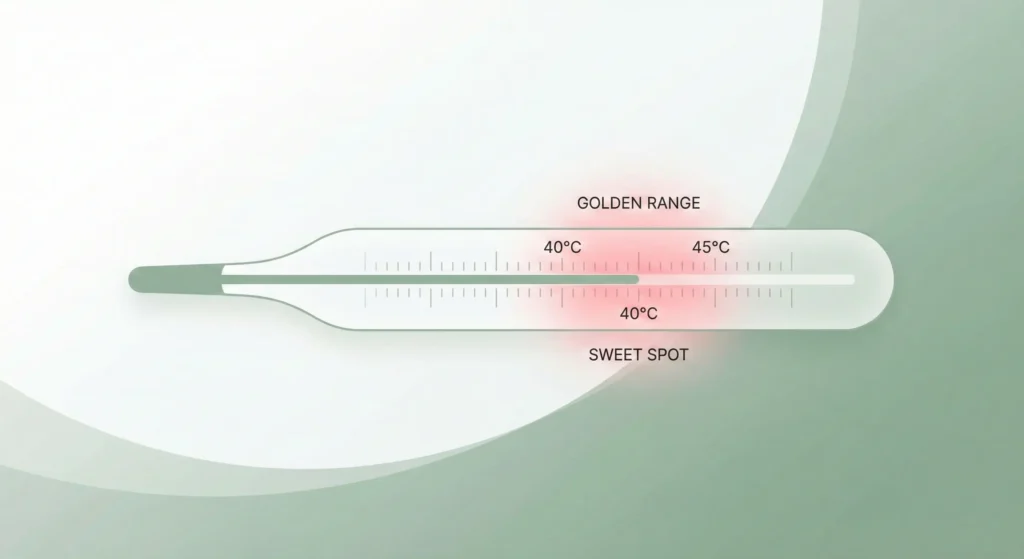
- The Sweet Spot: Research identifies 40°C-45°C (104°F-113°F) as the optimal temperature range for maximizing blood flow without damaging the skin.
- Too Hot vs. Too Cold: Temperatures above 45°C risk “Toasted Skin Syndrome,” while anything below 40°C fails to trigger deep muscle vasodilation.
- Stability is King: The biological benefits of heat rely on consistency. Fluctuating heat (like a cooling water bottle) breaks the pain-relief cycle.
Table of Contents
- Introduction: Are You Overheating Your Womb?
- The Science: Why 40°C-45°C?
- The Mechanism: Heat Receptors & Blood Flow
- The Solution: The Power of Precision
- FAQ Section
- Conclusion
- Read Next
Introduction: Are You Overheating Your Womb?
The Science: Why 40°C-45°C?
This specific range isn’t a random guess; it’s based on human physiology.
- Below 40°C (Ineffective): Many find that temperatures below 40°C provide a gentle, surface-level warmth. While perfectly cozy, some individuals share that they don’t experience the same depth of soothing sensation they look for during their cycle.
- Above 45°C (Dangerous): Temperatures exceeding 45°C start to trigger nociceptors (pain receptors) instead of soothing them. Prolonged exposure to high heat can also lead to Erythema Ab Igne (Toasted Skin Syndrome), a condition causing permanent skin discoloration[2].
The 40°C-45°C range is the biological “sweet spot” where therapeutic benefits are maximized while safety risks are minimized.
The Mechanism: Heat Receptors & Blood Flow
So, what happens in this golden range?
- TRPV1 Activation: Your skin has heat sensors called TRPV1 channels. At 40°C, these sensors gently activate, sending a signal to your brain that effectively blocks pain transmission (Gate Control Theory) without triggering an alarm response.
- A Feeling of Deep Warmth:Some research into localized warmth applications notes differences in sensation at varying temperatures[3]. Many users describe that consistent warmth in a certain range helps them feel more relaxed and at ease throughout their day.
The Solution: The Power of Precision
Understanding this “Sweet Spot” exposes the major flaw in traditional methods.
- Hot Water Bottles: They start at dangerously high temperatures (often 60°C+) and rapidly cool down past the therapeutic threshold. You get minutes of “too hot,” minutes of “just right,” and hours of “too cold.”
- Microwavable Bags: They suffer from “hot spots” that can cause burns while other areas remain cold.
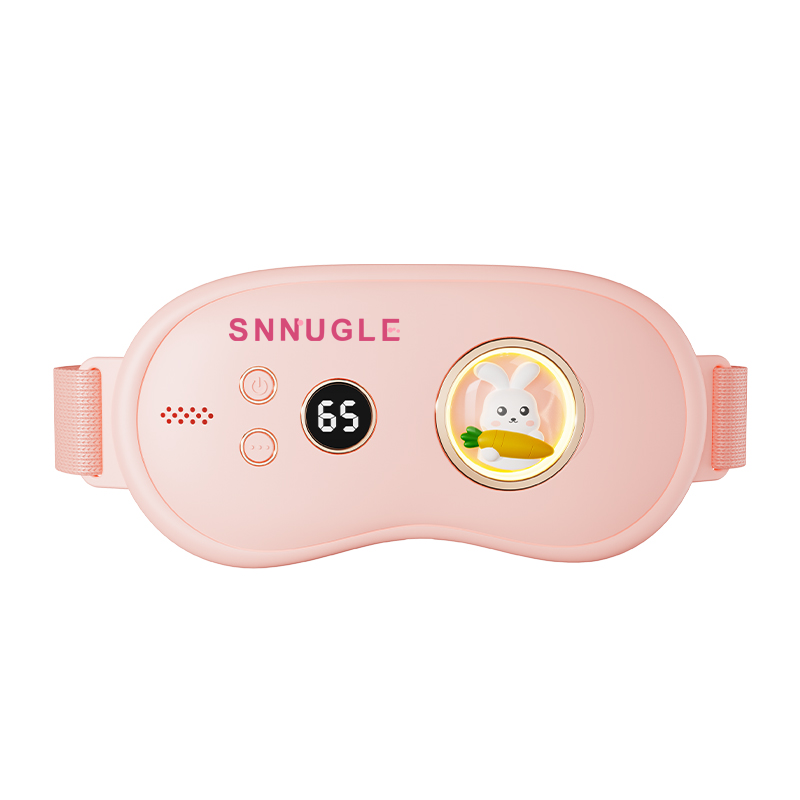
A Modern Approach to Consistent Warmth: For those seeking to maintain a consistent feeling of warmth, modern tools can offer a helpful solution. This is part of the thinking behind the Snnugle Warmer‘s design.
Precision & Consistency: It’s designed with sensors to maintain a steady temperature within a set range, aiming to provide that reliable, hug-like warmth many users enjoy.
Sustained Comfort: Unlike a traditional hot water bottle that cools down, the idea is to offer enduring warmth. For many, this consistent sensation is a key part of creating a comforting and relaxing personal experience, removing the need to frequently re-adjust or reheat.
FAQ Section
Q1: Why is 40°C-45°C often mentioned for warmth? A: Many people share that this range provides a deeply soothing sensation without being too intense. It’s a common preference because it offers a feeling of penetrating warmth that can be maintained comfortably over time. Personally, I find sustained, gentle warmth more helpful than a brief, very high heat that quickly fades.
Q2: How can I use warmth safely and comfortably? A: Always start with a lower temperature setting to see what feels best for you. It’s a good practice to have a thin layer of fabric between any heat source and your skin. Listen to your body—if anything feels uncomfortable, adjust or remove the heat source. For specific guidance on using any product, please follow the manufacturer’s instructions.
Q3: I notice my skin looks different after using warmth. Is this typical? A: It’s not uncommon for skin to show temporary redness as a response to warmth, which usually fades quickly. This is often just the body’s natural reaction. However, if you have any concerns about skin changes, sensitivity, or persistent reactions, the best course of action is to consult with a doctor or dermatologist for personalized advice.
Conclusion
Read Next
- Chapter 4: Menstrual Phase: Pain Management & Deep Restoration
- Why Heat Works: The Science of Vasodilation and Period Relief
- What is “Toasted Skin Syndrome”? How to Avoid Low-Temperature Burns
References
[1] Petrofsky, J. S., et al. (2020). The physiology of heat therapy: Vasodilation and tissue oxygenation. Journal of Applied Physiology. [2] Riahi, R. R., & Cohen, P. R. (2021). Erythema ab igne: A review of the literature. American Journal of Clinical Dermatology. [3] Jo, J., & Lee, S. H. (2021). Optimal temperature ranges for dysmenorrhea management: A systematic review. International Journal of Nursing Studies.
Medical Disclaimer: This content is for informational purposes only and is not a substitute for professional medical advice, diagnosis, or treatment. Always seek the advice of your physician or qualified health provider with any questions you may have regarding a medical condition.
Author:Snny
Your partner in menstrual health knowledge, blending ancient wisdom with modern science for deeper comfort.
tip
Looking for a gentle relief solution? Try the Snny-recommended heating pad.
Snnugle
Your trusted confidant for cycle care, here to offer thoughtful warmth and support.
Quick Links
Disclaimer: Content here is for informational & community support purposes only, and is not medical advice. Product experiences shared are based on personal use. We gently encourage you to always consult your healthcare provider for personal medical decisions.
© 2025 Snnugle. All rights reserved.