
Decoding Your Flow: What Period Blood Color Says About Your Health
By Snny | JUNE 11, 2025 | 6 min read
📌 Key Takeaways
- It’s About Time, Not Just Toxins: The color of your blood is primarily determined by how long it has been exposed to oxygen (oxidation).
- Bright Red = Fresh: This indicates active bleeding and a consistent flow, ensuring blood exits the body quickly.
- Brown/Black = Older Blood: Darker shades mean the blood took longer to travel from the uterus to the exit, which is normal at the start or end of your cycle.
- When to Check-in: While most color changes are normal, grey or orange tinges, especially with a foul odor, warrant a doctor’s visit.
- Comfort Over Color: No matter the shade, Snnugle is there to soothe the uterine contractions that cause the cramps.
 Table of Contents
- The Rainbow of Your Cycle: Why Color Changes
- Bright Red: The “Fresh Flow” Standard
- Dark Brown or Black: Old Blood & Slow Flow
- Pink or Watery: The Lighter Days
- When to Worry: Grey, Orange, or Excessive Clots
- Snnugle’s Role in Your Cycle Comfort
- FAQ: Period Blood Color
- Conclusion
Introduction
Let’s talk about something we all see but rarely discuss: the contents of your pad or cup. It’s natural to wonder if what you’re seeing is “normal.” The truth is, your period blood can range from bright raspberry to deep chocolate brown—and it’s all usually a sign of a healthy, functioning system. Think of this guide as your decoder ring for the language of your uterus.
The Rainbow of Your Cycle: Why Color Changes
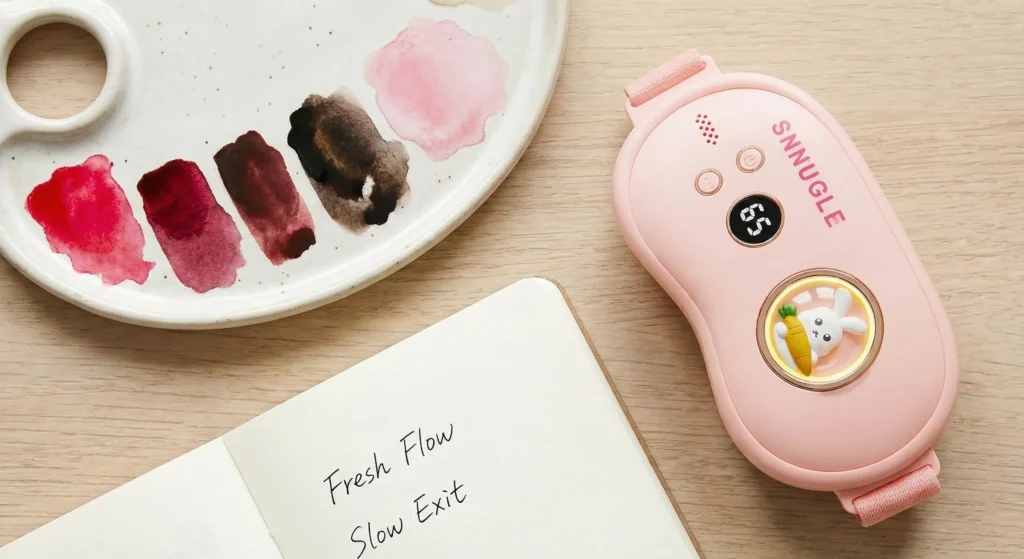
The primary reason period blood changes color is simple chemistry: oxidation. Just like a sliced apple turns brown when left out, blood gets darker the longer it is exposed to oxygen. The color tells you more about the speed of your flow than anything else.
Bright Red: The "Fresh Flow" Standard
Bright, cranberry-red blood is typically what you see on the heaviest days of your period (usually days 2-3).
Dark Brown or Black: Old Blood & Slow Flow
Seeing brown or even black discharge can be alarming, but it’s usually completely normal.
Pink or Watery: The Lighter Days
Pink blood is most common at the start of your period or during spotting phases.
When to Worry: Grey, Orange, or Excessive Clots
While most colors are fine, a few indicate a need for medical attention:
Snnugle's Role in Your Cycle Comfort
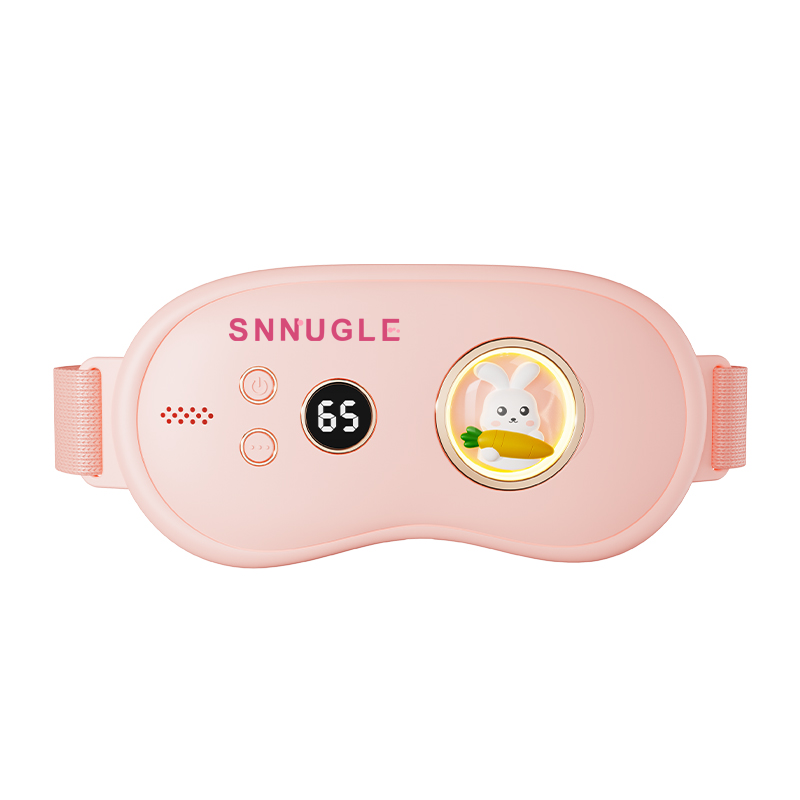
No matter what color your flow is, the uterine contractions that push it out can be painful. The color of the blood doesn’t change the cramping mechanism. That’s where your Snnugle Warmer comes in. By applying consistent, soothing heat, you relax the uterine muscles, improving circulation and making the entire shedding process—regardless of the shade—more comfortable.
FAQ: Period Blood Color
- Q: Is dark, clotty blood bad?
- A: Not necessarily. Dark means it’s older, and small clots are just part of the uterine lining shedding. It’s only a concern if the clots are consistently very large (bigger than a quarter) and accompanied by excessive bleeding.
- Q: Why does my blood color change from day to day?
- A: Because the speed of your flow changes! It’s usually fastest in the middle days (bright red) and slower at the start and end (brown/pink). This variation is perfectly healthy.
References
- American College of Obstetricians and Gynecologists (ACOG): “Heavy Menstrual Bleeding.”
- Cleveland Clinic: “What Do Different Period Blood Colors Mean?”
Disclaimer: This content is for informational purposes only and does not constitute medical advice. Always consult with a healthcare professional for persistent or severe health issues.
Next Read
- Predict and Manage Period Pain with Cycle Tracking
- The Pelvic Floor Connection: Why Relaxation Equals Comfort
- Why Heat Works: The Science of Vasodilation and Period Relief
Author:Snny
Your partner in menstrual health knowledge, blending ancient wisdom with modern science for deeper comfort.
tip
Looking for a gentle relief solution? Try the Snny-recommended heating pad.