
Charter 3 : How to Accurately Track Your Cycle
🕒 7 min read | Last Updated: [Date]
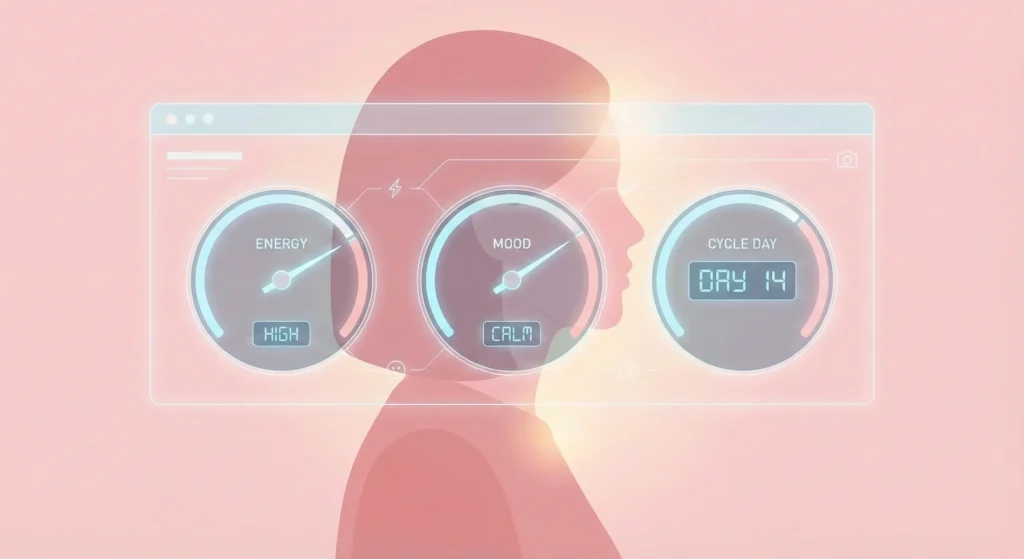
Imagine driving a car without a dashboard.
No speedometer, no fuel gauge, no warning lights. You are just guessing when to refuel or when the engine is overheating. Sounds stressful, right? Yet, this is how most of us navigate our hormonal health.
We rely on vague memories (“I think my period was three weeks ago?”) or a generic app that guesses based on averages. But your body is not an average.
In this chapter, we are going to build your dashboard. Accurate tracking is the only way to predict when pain will strike, confirm if you are actually ovulating, and finally understand why your mood shifts overnight.
💡 Key Takeaways
- Day 1 Rule: The first day of full flow is Day 1. Spotting does not count.
- Apps have limits: Most standard apps rely on averages. To be truly accurate, they need your real-time data (like temperature).
- The Temperature Shift: Your body heat rises after ovulation (thanks, Progesterone). This is the only way to confirm ovulation at home.
- Cervical Mucus: It predicts ovulation before it happens.
Rule #1: Defining “Day 1” Correctly
This is the most common mistake. If you get your start date wrong, your entire cycle math is broken.
Day 1 is the first day of full flow that requires menstrual protection.
It is not the day you see a tiny brown spot on your underwear. It is not the day you feel cramps but no blood. If you start spotting on Tuesday but the full flow opens the floodgates on Thursday, Thursday is Day 1.
Method 1: Basal Body Temperature (BBT)
What it is: Taking your temperature immediately upon waking up, before you even sit up in bed.
Why it works: Remember Progesterone from Chapter 1? It is thermogenic (heat-producing). Before ovulation, your temp is naturally lower. Within 1-3 days after ovulation, Progesterone surges and your temp jumps up (usually by 0.5°F to 1.0°F) and stays high until your period starts.
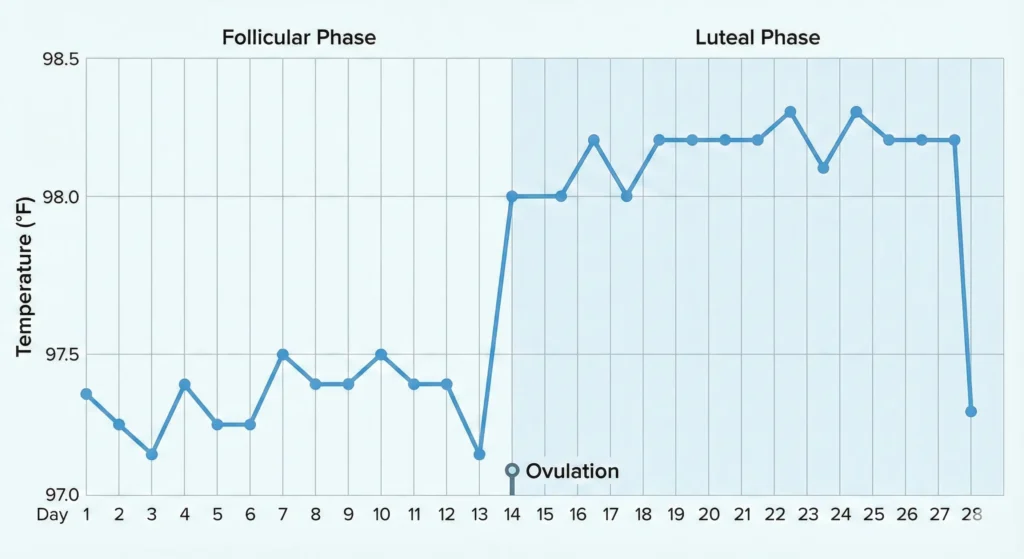
Why track it? It is the only way to confirm you actually ovulated. If you have a cycle where the temp never jumps, you likely had an “anovulatory cycle” (common in PCOS or high stress), meaning no egg was released, but you might still bleed later.
- The Tool: You need a basal thermometer (measures to two decimal places, e.g., 97.56°F), not a regular fever thermometer.
- The Rule: Measure at the same time every morning (+/- 30 mins) after at least 3 hours of sleep.
Method 2: Cervical Mucus (The “Visual” Cue)
What it is: Paying attention to the fluid your body produces throughout the month.
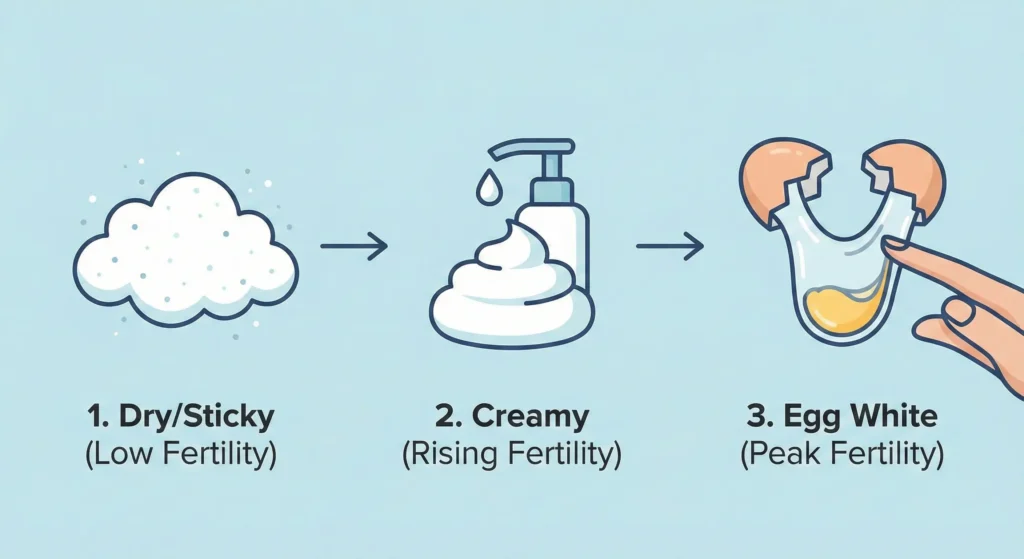
Why it works: While BBT tells you ovulation just happened (past tense), cervical mucus tells you ovulation is approaching (future tense). Estrogen changes the texture of this fluid to make it easier for sperm to swim.
- Dry/Sticky: Usually right after your period (Low fertility).
- Creamy/Lotion-like: Estrogen is rising (Fertility is possible).
- Raw Egg White: Clear, stretchy, and slippery. This is peak Estrogen. Ovulation is imminent.
Method 3: The Tech Trap (Apps)
The Truth: Most period tracker apps are just fancy calendars. If you tell them your period started on the 1st, they will simply count forward 14 days and put a flower icon there to say “Ovulation.”
But what if you ovulate on day 18 because you were stressed? The app won’t know unless you feed it data (like BBT or mucus).
How to use them correctly: Use apps to log symptoms. Track your pain levels, your mood, and your energy. Over 3-4 months, you will see patterns. Does your back always ache on Day 24? Do you always get a migraine on Day 1? That data is gold for managing your health (and knowing when to have your Snnugle Warmer ready).
🔬 For the Science Geeks: The Thermogenic Effect
Why does Progesterone make you hot? Progesterone acts on the hypothalamus (the brain’s thermostat) to increase the metabolic rate. This is why you might feel physically warmer or sweat more easily during the Luteal phase.If your temperature drops suddenly after staying high for the second half of your cycle, it’s a bio-signal that Progesterone levels are falling and your period is likely just around the corner.
🎓 Test Your Knowledge
1. When does ‘Day 1’ of your cycle technically begin?
See Answer
Spotting does not count as Day 1!
2. What does a sustained rise in Basal Body Temperature indicate?
See Answer
Progesterone heats up the body after the egg is released.
Medical Disclaimer: This content is for informational purposes only and is not a substitute for professional medical advice, diagnosis, or treatment.