
Breathe Through the Pain: A 5-Minute Diaphragmatic Breathing Guide
By Snny | JULY 10, 2025 | 6 min read
📌 Key Takeaways
- The Pain Instinct: When cramps hit, our natural instinct is to hold our breath and take shallow chest breaths, which actually increases pain signaling.
- The Vagus Nerve Hack: Deep “belly breathing” activates the vagus nerve, flipping your body’s switch from “fight or flight” to “rest and digest.”
- Internal Massage: The diaphragm moving down gently massages the uterus and pelvic organs, encouraging blood flow and releasing tension.
- Heat + Breath: Combining Snnugle’s warmth relaxes abdominal muscles, making deep breathing easier and more effective.
 Table of Contents
- Why We Stop Breathing When It Hurts
- The Science: How “Belly Breathing” Stops Cramps
- The 5-Minute Snnugle Breathing Ritual (Step-by-Step)
- Why It Feels Hard at First (The “Uterus Crunch”)
- FAQ: Breathing & Pain Relief
- Conclusion
Introduction
Think about the last time a sharp cramp hit you. What was the very first thing your body did? You likely tensed up, clenched your jaw, and held your breath. This is a natural protective reflex, but ironically, it’s the exact opposite of what your uterus needs. Today, we’re learning how to override that reflex with diaphragmatic breathing—a 5-minute tool to manually lower the volume on your pain.
Why We Stop Breathing When It Hurts
Pain is perceived by the brain as a threat. This triggers your sympathetic nervous system (the “fight or flight” mode). To prepare for danger, your body shifts to shallow, rapid breathing in the upper chest. While useful if you’re running from a bear, during your period, this shallow breathing deprives your pelvic muscles of oxygen, causing them to seize up further and intensifying the cramping.
The Science: How "Belly Breathing" Stops Cramps
Diaphragmatic breathing, or “belly breathing,” is the antidote. It involves engaging the diaphragm, a large dome-shaped muscle at the base of your lungs.
When you breathe deeply enough that your belly expands, you physically stimulate the vagus nerve. This nerve is the commander of your parasympathetic nervous system (the “rest and digest” mode). Activating it instantly slows your heart rate, lowers blood pressure, and releases endorphins—your body’s natural painkillers. It tells your brain: “We are safe. You can stop clenching now.”
The 5-Minute Snnugle Breathing Ritual (Step-by-Step)
This simple practice is best done lying down, especially when pain is acute.
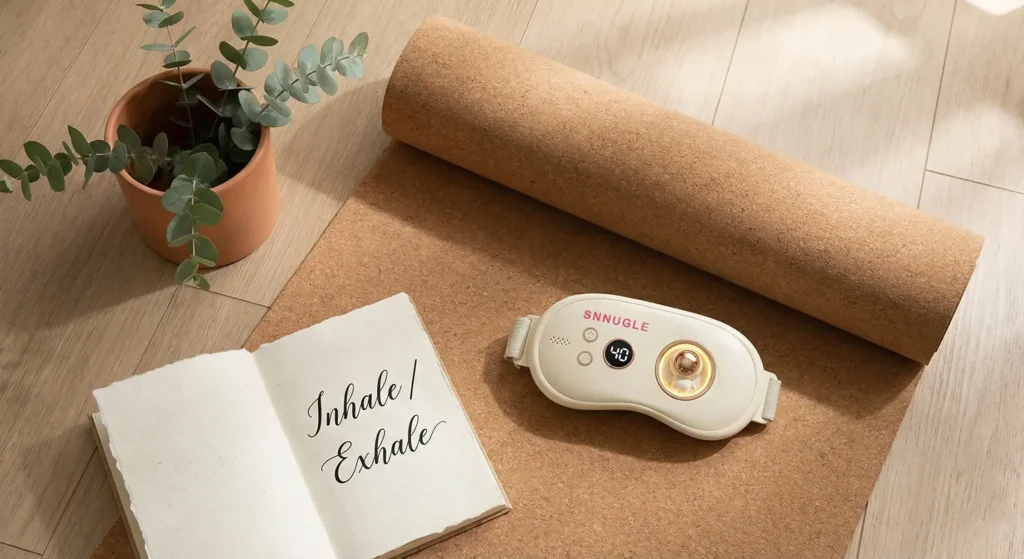
- Step 1: Apply Heat. Strap on your Snnugle Warmer (set to a comfortable 40°C-45°C). The heat pre-relaxes the abdominal wall, making it easier for your belly to expand.
- Step 2: Get Grounded. Lie on your back in bed or on a mat. Bend your knees with feet flat on the floor to release lower back tension.
- Step 3: Hand Placement. Place one hand on your chest and the other on your belly (over your Snnugle).
- Step 4: The Inhale (4 counts). Inhale slowly through your nose. Focus on pushing your belly up against your hand. The hand on your chest should remain relatively still.
- Step 5: The Exhale (6 counts). Exhale slowly through pursed lips (like blowing out a candle). Feel your belly gently sink back down.
- Repeat for 5 minutes. Focus only on the rise and fall of your lower hand.
Why It Feels Hard at First (The "Uterus Crunch")
If you try this during intense pain, it might feel counterintuitive or even uncomfortable to “push out” your belly. Your abdominal muscles are currently guarding your inflamed uterus. This is normal. Start gently. Don’t force the expansion; just invite the breath lower than your chest. The combination of Snnugle’s heat and slow exhales will gradually coax those muscles to yield.
FAQ: Breathing & Pain Relief
- Q: Can breathing replace painkillers?
- A: For mild to moderate cramps, sometimes yes. For severe pain, it is a powerful complementary tool that can help medication work more effectively by calming the nervous system.
- Q: How often should I do this?
- A: Anytime you feel a wave of pain coming on, or whenever you notice yourself tensing your shoulders or holding your breath.
References
- Pain Medicine: “The effect of deep and slow breathing on pain perception, autonomic nervous system activity, and mood state.”
- Frontiers in Psychology: “The physiological effects of slow breathing in the healthy human.”
Disclaimer: This content is for informational purposes only and does not constitute medical advice. Always consult with a healthcare professional for persistent or severe health issues.
Next Read
- The Stress-Pain Loop: How Cortisol Spikes Your Cramps
- The Pelvic Floor Connection: Why Relaxation Equals Comfort
- Why Heat Works: The Science of Vasodilation and Period Relief
Author:Snny
Your partner in menstrual health knowledge, blending ancient wisdom with modern science for deeper comfort.
tip
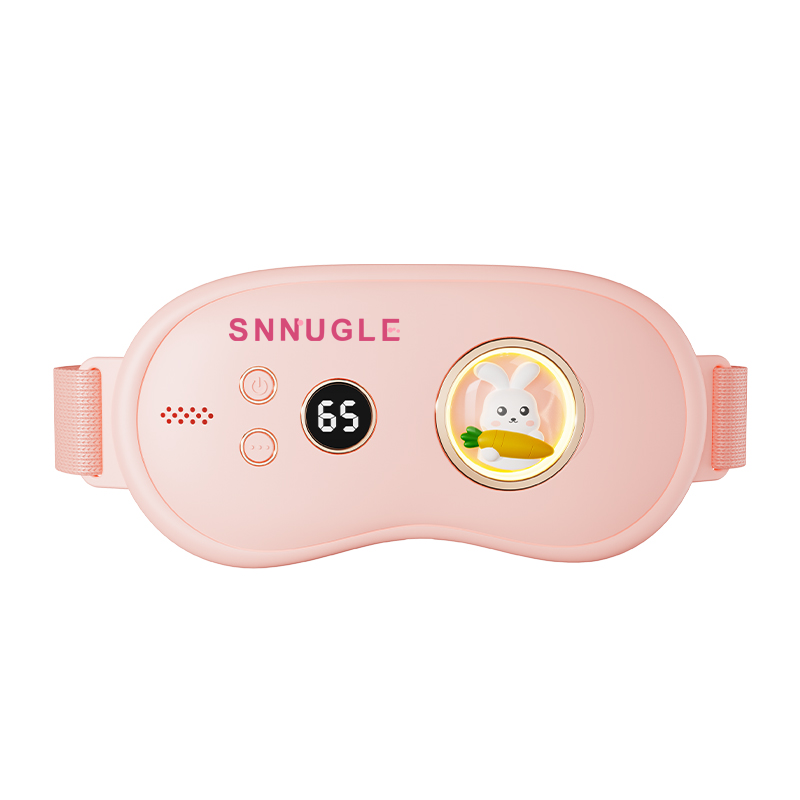
Looking for a gentle relief solution? Try the Snny-recommended heating pad.
Snnugle
Your trusted confidant for cycle care, here to offer thoughtful warmth and support.
Quick Links
Disclaimer: Content here is for informational & community support purposes only, and is not medical advice. Product experiences shared are based on personal use. We gently encourage you to always consult your healthcare provider for personal medical decisions.
© 2025 Snnugle. All rights reserved.