Introduction
When cramps strike, sometimes the most comforting thing you can do is curl up with something warm. But what if that warm drink could actually fight the pain? For centuries, herbal teas have been used as powerful natural remedies for menstrual discomfort. As your science-backed bestie, I’m here to tell you this isn’t just folklore. Many common herbs contain potent compounds that target the very source of your cramps. Let’s brew up some relief with five evidence-based recipes.
More Than Just a Cozy Drink: The Science of Herbal Medicine
The magic of herbal tea lies in phytochemicals—biologically active compounds found in plants. When steeped in hot water, these compounds are released, creating a “liquid medicine” that your body can easily absorb.
For period pain, we are looking for herbs with specific properties:
- Antispasmodics: These relax the smooth muscle tissue of the uterus, reducing the intensity of contractions (cramps).
- Anti-inflammatories: These help lower the levels of prostaglandins, the hormone-like chemicals that trigger pain and inflammation.
- Carminatives: These soothe the digestive tract, relieving the bloating and gas that often accompany a period.
The 5 Recipes for Period Comfort
Recipe #1: The Intense Cramp Fighter (Ginger Root)
- The Science: Ginger is a heavyweight champion for cramps. Studies have shown that ginger compounds (gingerols and shogaols) can be as effective as ibuprofen for relieving period pain by powerfully inhibiting inflammatory prostaglandins.
- The Recipe:
- 1-inch piece of fresh ginger root, thinly sliced or grated (fresh is best!).
- 2 cups of water.
- Optional: A squeeze of lemon and honey to taste.
- Instructions: Simmer the ginger slices in water for 10-15 minutes (longer = stronger). Strain into a mug and add lemon/honey if desired. Sip slowly.
Recipe #2: The Gentle Relaxer (Chamomile & Honey)
- The Science: Chamomile is famous for its calming properties. It contains an antioxidant called apigenin that binds to receptors in your brain to decrease anxiety and initiate sleep. More importantly for cramps, it raises urinary levels of glycine, an amino acid that relieves muscle spasms in the uterus.
- The Recipe:
- 2 tablespoons dried chamomile flowers (or 2 high-quality tea bags).
- 1.5 cups hot water (not boiling).
- Optional: 1 teaspoon raw honey.
- Instructions: Steep the chamomile covered for 5-10 minutes to keep the essential oils in. Strain and stir in honey.
Recipe #3: The Bloat Banisher (Peppermint)
- The Science: If your period comes with a side of bloating, gas, or an upset stomach, peppermint is your go-to. The menthol in peppermint is a potent antispasmodic for the digestive tract, helping to relax gut muscles and allow trapped gas to pass.
- The Recipe:
- 1 tablespoon fresh peppermint leaves (or 1 tablespoon dried).
- 1.5 cups boiling water.
- Instructions: Pour boiling water over the leaves, cover, and steep for 7-10 minutes. Strain and enjoy.
Recipe #4: The Warming Circulator (Cinnamon Spice)
- The Science: In Traditional Chinese Medicine (TCM), cinnamon is used to warm the body and invigorate blood flow. Modern research suggests it has anti-inflammatory properties and may help reduce uterine contractions and bleeding volume. It’s like a warm hug for your pelvis.
- The Recipe:
- 1 cinnamon stick (or 1 teaspoon ground cinnamon, though it can be gritty).
- 1.5 cups water.
- Optional: A splash of almond milk.
Instructions: Simmer the cinnamon stick in water for 10 minutes. Remove the stick and enjoy the warming, spicy aroma.
Recipe #5: The Uterine Calmer (Fennel Seed)
- The Science: Fennel seeds contain a compound called anethole, which has estrogen-like and strong antispasmodic properties. It’s excellent for relaxing the uterus and has been shown in clinical trials to effectively reduce menstrual pain intensity.
- The Recipe:
- 1 teaspoon dried fennel seeds, lightly crushed to release oils.
- 1 cup boiling water.
- Instructions: Steep the crushed seeds covered for 5-10 minutes. Strain before drinking. It has a mild, sweet licorice flavor.
Snnugle Warmer & Tea: Warmth from the Inside Out
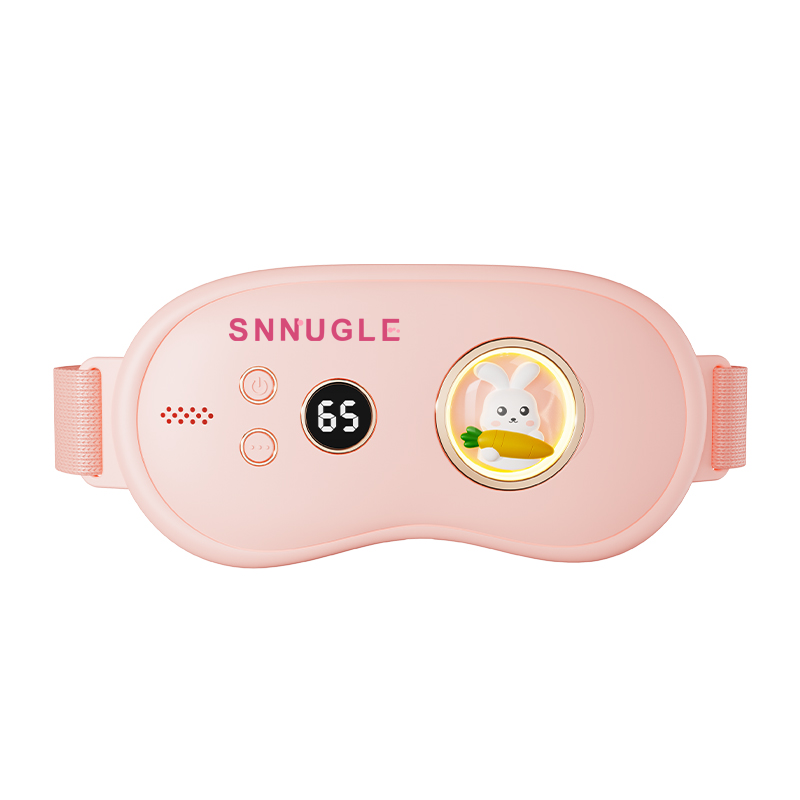
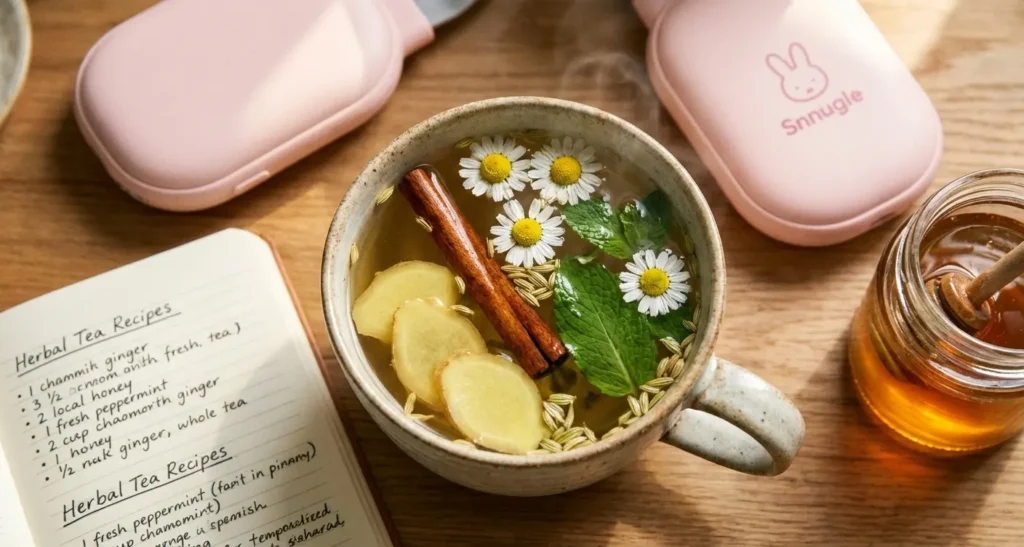
This is the ultimate comfort duo. While these teas work chemically from the inside to relax muscles and lower inflammation, your Snnugle Warmer provides targeted physical heat from the outside.
Drinking a hot beverage raises your internal body temperature and draws blood flow to your core. Combining this internal warmth with the consistent 40°C–45°C external heat of Snnugle creates a powerful synergistic effect, maximizing circulation and muscle relaxation in the pelvic area. It’s a holistic ritual that signals to your entire body that it’s time to rest and heal.
FAQ: Your Safety Questions Answered
- Q: Can I use heat if my period pain feels “sharp”?
- A: Sharp, localized pain can sometimes indicate an issue that heat won’t solve (like a ruptured cyst).
- Q: Is it safe to use heat if I have an IUD?
- A: Generally, yes. Heat therapy is external and doesn’t affect IUD placement.
- Q: Should I use heat if I have a fever?
- A: No. Wait until your fever has fully subsided before resuming heat therapy.
Conclusion
Next time your period arrives with vengeance, don’t just suffer through it. Treat yourself to the ritual of brewing one of these healing teas. By combining the ancient wisdom of plant medicine with modern tools like Snnugle, you are taking an active, loving role in managing your cycle comfort.
Read Next
- Omega-3 vs. Omega-6: Eating Your Way to an Anti-Inflammatory Cycle
- Magnesium: Nature’s Muscle Relaxant (Plus a High-Magnesium Food List)
- Mittelschmerz Relief: Can You Use Heat for Ovulation Pain?
- The Golden Range: Why 40°C-45°C is the Biological “Sweet Spot” for Relief
- Why Heat Works: The Science of Vasodilation and Period Relief
References
- Pain Medicine. “Efficacy of Ginger for Alleviating the Symptoms of Primary Dysmenorrhea: A Systematic Review and Meta-analysis of Randomized Clinical Trials.”
- Journal of Pharmacopuncture. “Effect of Chamomile extract on primary dysmenorrhea.”。
- Archives of Gynecology and Obstetrics. “Herbal medicine for primary dysmenorrhea: a systematic review.”
Disclaimer: This content is for informational purposes only and does not constitute medical advice. Always consult with a healthcare professional for persistent or severe health issues.

 Key Takeaways