
Charter 13 : Birth Control, Fertility & Cycle Health
🕒 10 min read | Module: Troubleshooting 💊
The Pause Button.
Hormonal Birth Control (HBC) is a miraculous tool that has given women freedom over their lives. However, there is a massive gap in education about how it actually works. Many women believe the pill regulates their cycle. In reality, it turns the cycle off.
This chapter is not about judging your choices—it is about ensuring you are informed. Whether you are on the pill, thinking about it, or transitioning off it, you need to know how synthetic hormones interact with your natural biology and how to support your body through the process.
💡 Key Takeaways
- No Ovulation: Most HBC works by stopping ovulation. No egg = no natural progesterone.
- Fake Period: The bleed you have on the pill is a ‘Withdrawal Bleed,’ not a real menstruation.
- Nutrient Robbery: The pill is known to deplete Magnesium, Zinc, and B Vitamins. Supplementation is key.
- Fertility is Health: Even if you don’t want babies, ovulating is important for bone and heart health.
1. The Mechanism: A Chemical Menopause
Hormonal birth control (the pill, patch, ring, implant) works by flooding your body with synthetic versions of estrogen and progesterone. These levels are kept high enough to trick your brain into thinking you are already pregnant.
As a result, your brain stops sending the signal (FSH/LH) to your ovaries to release an egg. You do not ovulate.
Without ovulation, you do not produce your own natural progesterone—the hormone that calms anxiety, builds bone density, and supports long-term breast health. This is why some women feel ‘flat’ or anxious on the pill.
2. Real Period vs. Withdrawal Bleed
If you are taking the pill and bleeding every month, you might think your cycle is normal. It isn’t.
- Real Period: Happens about 14 days after ovulation. It sheds a lining that was built by natural estrogen.
- Withdrawal Bleed: Happens because you stopped taking the active hormones (placebo week). The drop in synthetic hormones causes the lining to destabilize and shed.
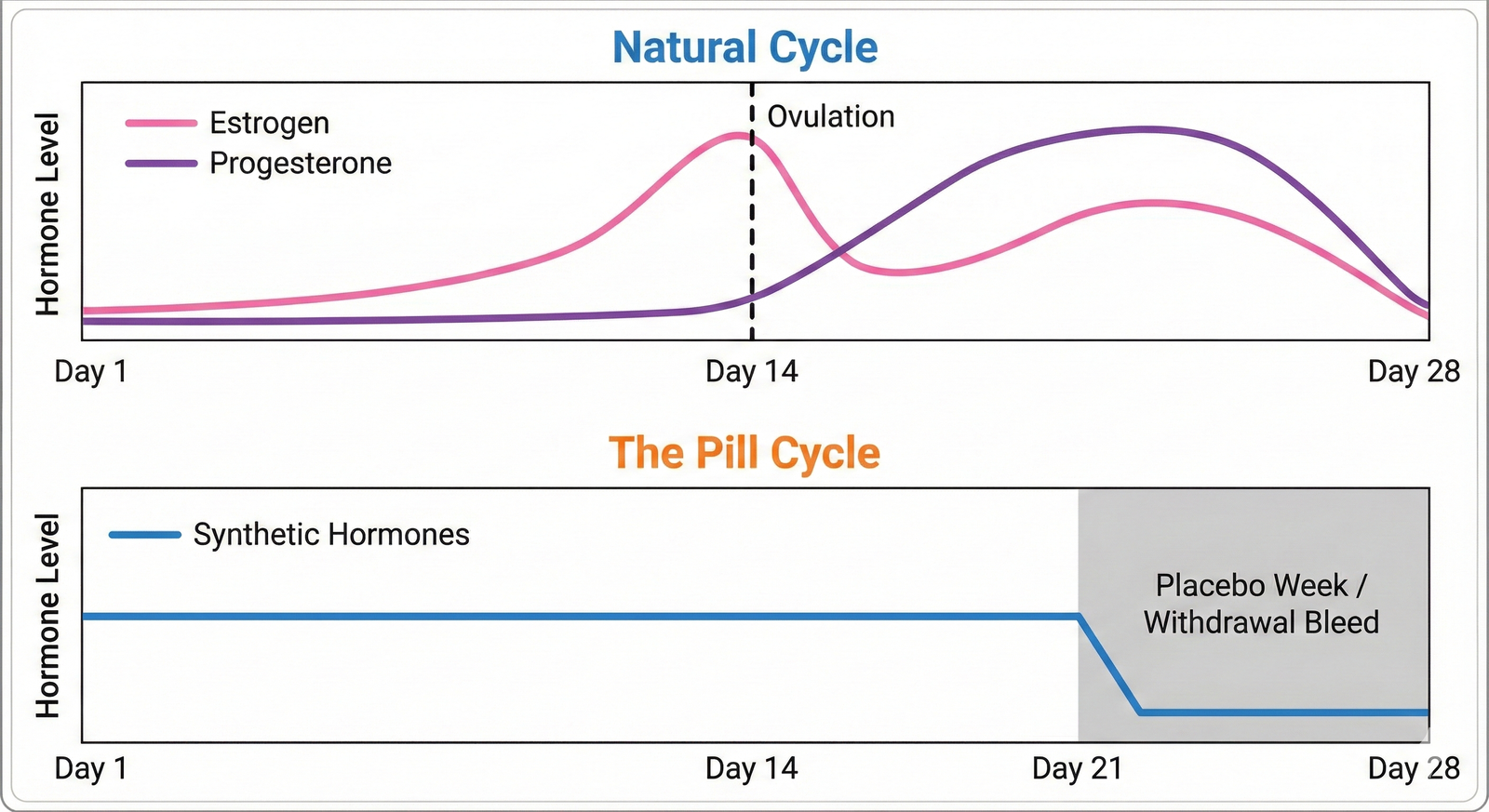
Why does this matter? A withdrawal bleed can still hurt! But the mechanism is different. If you have cramps during your placebo week, heat therapy is still effective because it relaxes the uterine muscles contracting to shed that lining.
3. The Nutrient Drain
This is the most overlooked side effect. Studies show that oral contraceptives aggressively deplete key nutrients:
- Magnesium: Essential for cramp prevention and sleep.
- Zinc: Vital for skin health and immune function.
- B Vitamins (B6, B12, Folate): Critical for energy and mood stability.
4. Coming Off: Post-Birth Control Syndrome
Deciding to stop HBC is a big step (and one you should discuss with your healthcare provider first). Your ovaries have been ‘offline’ for years, and now they need to reboot. This transition can be rocky.
Common symptoms (PBCS):
- Acne Surge: Your skin produces more oil as androgens rebound.
- Amenorrhea: Your period might hide for months as your brain and ovaries relearn how to talk to each other.
- Pain Returns: Without the suppression, your natural cramps might return with a vengeance.
Be Prepared: Don’t just stop cold turkey without a plan. Have your nutrition dialed in, your supplements ready, and your Snnugle Warmer on standby for when that first real period hits.
🔬 For the Science Geeks: Why Ovulate?
Even if you never want children, ovulation is a sign of health. It is the only way your body makes progesterone. Progesterone is crucial for bone mineral density (preventing osteoporosis later in life) and cardiovascular health. Think of ovulation not just as a baby-making event, but as a monthly deposit into your long-term health bank account.
🎓 Test Your Knowledge
1. Do you ovulate while on the combination pill?
See Answer
The pill works primarily by suppressing ovulation.
2. What is the bleed called when you are on the pill?
See Answer
It is caused by the drop in synthetic hormones, not by a natural cycle.
Medical Disclaimer: This content is for informational purposes only and is not a substitute for professional medical advice, diagnosis, or treatment.