
Charter 12 : Navigating Common Issues (PCOS, Endometriosis, etc.)
🕒 12 min read | Module: Troubleshooting 🩺
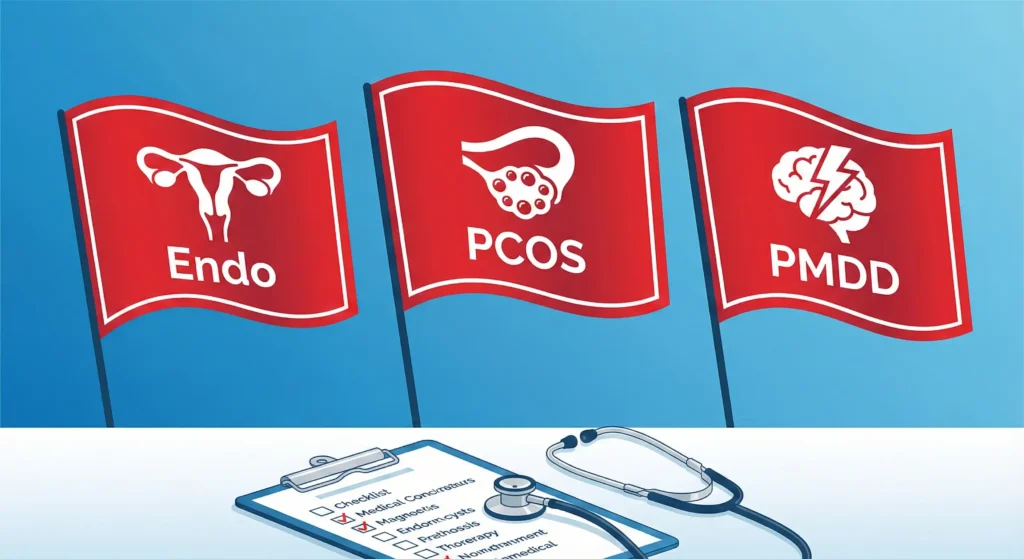
Pain is common, but it is not always normal.
We have been taught to grit our teeth and bear it. We are told that fainting from cramps, bleeding through a pad in an hour, or feeling suicidal before our period is just part of being a woman. It is not.
While mild cramping is a physiological response to prostaglandins (as we learned in Chapter 4), debilitating symptoms often point to underlying conditions like Endometriosis, PCOS, or PMDD. These are medical conditions that require treatment, not just willpower.
In this chapter, we will explain the red flags. Our goal is to empower you with the vocabulary you need to talk to your doctor and advocate for your own health.
💡 Key Takeaways
- The 2-Day Rule: Normal cramps respond to ibuprofen and heat within 2 days. If pain persists, investigate.
- Endometriosis: Defined by pain outside the uterus (e.g., during sex or bowel movements).
- PCOS: Defined by irregular cycles (longer than 35 days) and androgen signs like acne.
- PMDD: A severe form of PMS that impacts mental health. It is a chemical sensitivity, not a mood swing.
1. Endometriosis: The Invisible Pain
What is it?
Tissue similar to the lining of the uterus grows outside the uterus (on ovaries, bowels, or bladder). During your cycle, this tissue bleeds just like your period, but the blood has nowhere to go, causing inflammation, scar tissue, and severe pain.
The Red Flags:
- Pain that does not go away with standard painkillers.
- Painful bowel movements or urination during your period.
- Pain during or after sex.
- Chronic lower back pain throughout the month, not just during bleeding.
2. PCOS (Polycystic Ovary Syndrome)
What is it?
A hormonal imbalance involving high levels of androgens (male hormones) and insulin resistance. It often prevents ovulation.
The Red Flags:
- Irregular Periods: Cycles longer than 35 days, or skipping months entirely.
- Physical Signs: Cystic acne (jawline), thinning hair on the head, or excess hair growth on the face/body (hirsutism).
- Weight Gain: Especially around the midsection, which is hard to lose due to insulin resistance.
Management: Unlike Endo (which is about pain), managing PCOS is about blood sugar stability. Strategies like a high-protein breakfast and supplements like Inositol (discuss this with your doctor first!) can be game-changers.
3. PMDD (Premenstrual Dysphoric Disorder)
What is it?
Think of PMS, but magnified by 100. It affects about 5-8% of women. It is not caused by hormone imbalance, but by the brain having an abnormal, severe reaction to normal hormonal fluctuations.
The Red Flags:
- Feelings of hopelessness or extreme sadness. (Note: If you experience suicidal thoughts, please seek immediate professional support.)
- Panic attacks or severe anxiety in the Luteal phase.
- Symptoms completely disappear once bleeding starts (Day 1-2).
4. When to See a Doctor (The Checklist)
If you check more than two of these boxes, please book an appointment with a gynecologist who specializes in pelvic pain.
- [ ] My period lasts longer than 7 days.
- [ ] I soak through a super tampon/pad in less than 1 hour.
- [ ] I have to miss work or school because of the pain.
- [ ] I vomit or faint from the pain.
- [ ] OTC painkillers (Ibuprofen/Naproxen) do not work for me.
🔬 For the Science Geeks: What is the Corpus Luteum?
Great question. After the follicle releases the egg during ovulation, the leftover shell of the follicle transforms into a temporary gland called the Corpus Luteum. Its sole job is to pump out Progesterone to keep the uterine lining intact. If pregnancy doesn’t happen, the Corpus Luteum disintegrates after about 12-14 days. When it dies, Progesterone levels crash, and that crash is what triggers your period to start.
🔬 For the Science Geeks: Cysts vs. Follicles
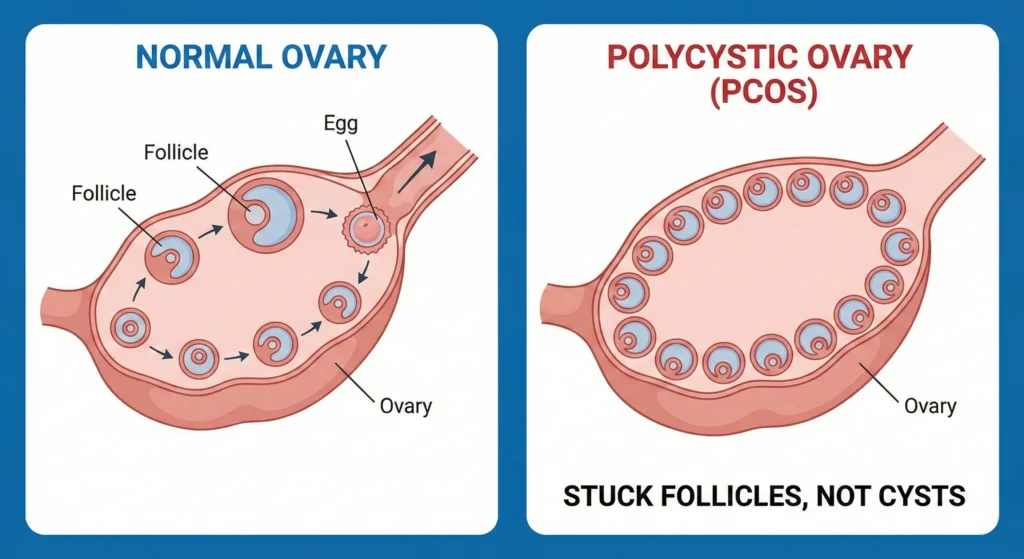
The name ‘Polycystic’ Ovary Syndrome is actually a misnomer. The ‘cysts’ seen on an ultrasound are usually not actual cysts, but immature follicles (eggs) that started to grow but never ovulated due to hormonal confusion. They pile up in the ovaries like a traffic jam. This is why ovulation tracking (Chapter 6) is so difficult but important for women with PCOS.
🎓 Test Your Knowledge
1. What is a key sign of Endometriosis?
See Answer
Or pain during sex/bowel movements.
2. Is it normal to soak a pad in less than 1 hour?
See Answer
This is called Menorrhagia and warrants a doctor’s visit.
Medical Disclaimer: This content is for informational purposes only and is not a substitute for professional medical advice, diagnosis, or treatment.