
Charter 9 : Cycle Syncing Movement
🕒 10 min read | Module: Advanced Solutions 💪
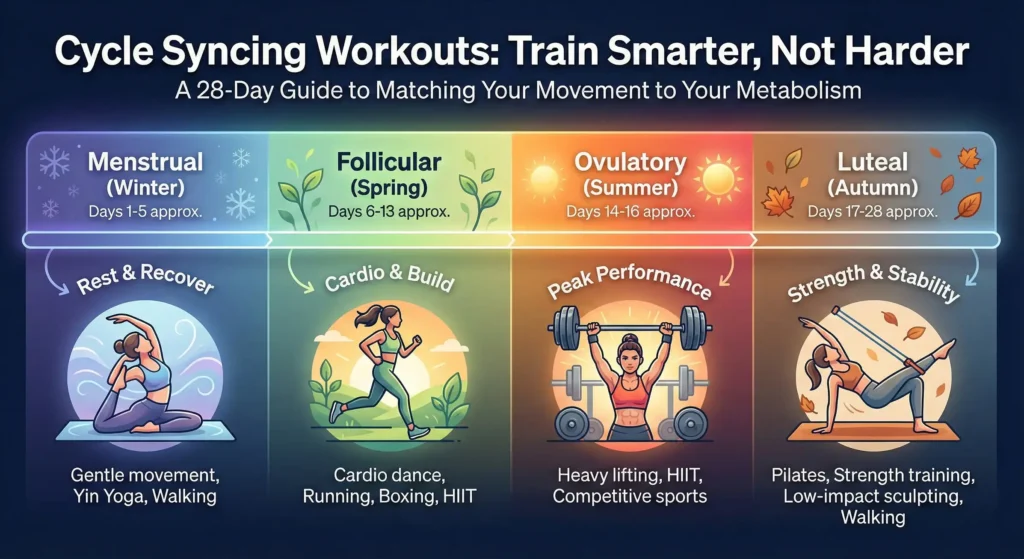
Stop fighting your body at the gym.
Most fitness plans act like your body is exactly the same every single day. But that ignores your biology. You, however, have a 28-day cycle.
Trying to crush a HIIT class when you are in your Luteal phase is not just ‘harder’—it is biologically counterproductive. It spikes cortisol, halts fat burning, and disrupts your progesterone.
In this chapter, we redefine fitness. It is not about being lazy; it is about being strategic. We will teach you how to match your intensity to your biology so you can build muscle, burn fat, and avoid burnout.
💡 Key Takeaways
- Estrogen builds muscle: Use the first half of your cycle (Follicular/Ovulatory) for heavy lifting and HIIT.
- Progesterone hates stress: In the second half, switch to steady-state cardio or Pilates to keep cortisol low.
- The ‘Bonk’ is real: Your blood sugar is less stable in the Luteal phase. You might need a snack before working out.
- Rest is not quitting: During menstruation, walking and stretching is the workout.
1. Menstrual Phase: Active Recovery
The Vibe: Restoration.
Your hormones are at rock bottom. Your inflammatory markers (prostaglandins) might be high. This is not the time to stress the body further. High-intensity exercise now can increase heavy bleeding and worsen fatigue.
- Best Movements: Yin Yoga, gentle walking (nature walks are best), and stretching.
- The Goal: Mobilize the pelvis gently to help relieve cramping, but do not spike the heart rate.
2. Follicular Phase: Cardio & Novelty
The Vibe: Build and Burn.
Estrogen is rising. Estrogen is ‘anabolic,’ meaning it helps build muscle and improves insulin sensitivity. Your body is primed to burn carbs for fuel. This means you can handle high intensity and recover quickly.
- Best Movements: Cardio dance, boxing, running, spinning.
- The Goal: Sweat. Challenge your cardiovascular system. Try that new class you’ve been scared of.
3. Ovulatory Phase: Maximum Intensity
The Vibe: Peak Performance.
With Testosterone peaking alongside Estrogen, you are basically Superwoman for 3 days. Your energy is explosive. If you are going to attempt a Personal Best (PB) on a deadlift or a sprint, do it now.
- Best Movements: HIIT (High Intensity Interval Training), heavy weightlifting, competitive sports.
- The Note: Be careful with your joints. Estrogen increases laxity (looseness) in ligaments, so your joints might feel different. Focus on good form and warm up well!
4. Luteal Phase: Strength & Stability
The Vibe: Maintenance and Form.
This is where most women get it wrong. As Progesterone rises, your body temperature goes up, and your resting heart rate increases. You might find that your usual 5K run feels significantly harder. That is not you getting ‘unfit’; that is physiology.
Also, Cortisol (stress hormone) competes with Progesterone. If you do crazy HIIT workouts now, your body perceives it as overload. Instead of burning fat, you might just be adding unnecessary stress to a system that is trying to rest.
- Early Luteal (Days 15-23): Strength training with lower reps and longer rest. Pilates. Slow steady running.
- Late Luteal (Days 24-28): Dial it back. Yoga, walking, and low-impact sculpting.
- The Goal: Maintain muscle without spiking cortisol.
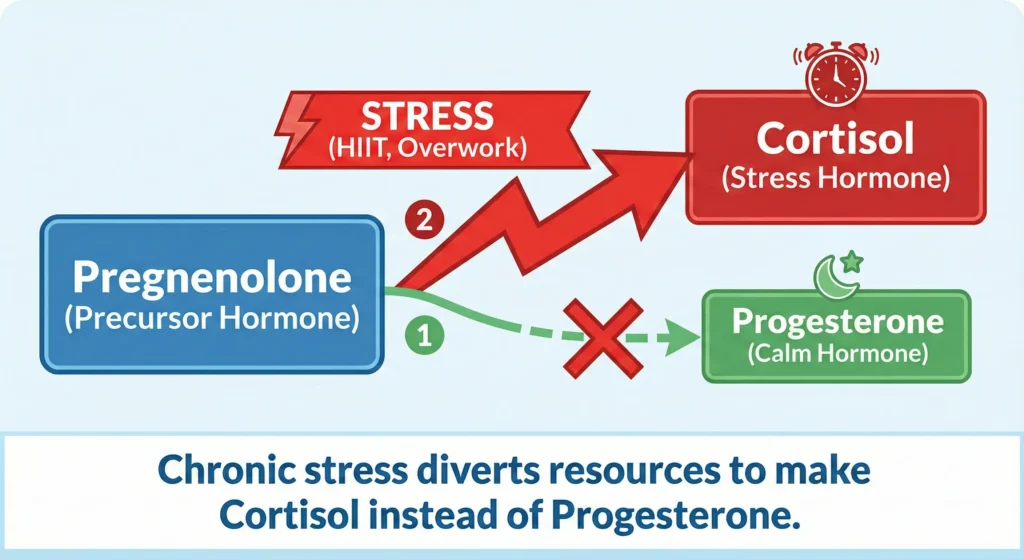
🔬 For the Science Geeks: Stress vs. Cycle Health
Chronic stress (including from over-exercising) triggers high levels of Cortisol. When your body is in “fight or flight” mode, it prioritizes survival over reproduction. This can disrupt your hormonal rhythm, potentially leading to more intense PMS or irregular cycles. This is why rest is actually productive—it signals safety to your body.
🎓 Test Your Knowledge
1. Why does high-intensity cardio feel harder in the Luteal Phase?
See Answer
Plus, cortisol levels rise more easily, making recovery slower.
2. What is the best time to attempt a personal best lift?
See Answer
Thanks to the spike in Testosterone and Estrogen!
Medical Disclaimer: This content is for informational purposes only and is not a substitute for professional medical advice, diagnosis, or treatment.