
Charter 8 : Cycle Syncing Nutrition
🕒 12 min read | Module: Advanced Solutions 🥗
Stop dieting. Start syncing.
For decades, diet culture has told women to eat the same amount of calories, macros, and salads every single day. But biologically, you are not the same person every day. Your metabolism, insulin sensitivity, and nutrient needs fluctuate wildly across your 28-day cycle.
Eating a raw kale salad might be energizing during your Ovulatory phase, but during your Menstrual phase, that same cold salad can actually worsen bloating and cramps.
In this chapter, we are ditching the calorie counting. Instead, we’ll look at food as code—instructions you send to your hormones to help them maintain balance, rebuild, and soothe.
💡 Key Takeaways
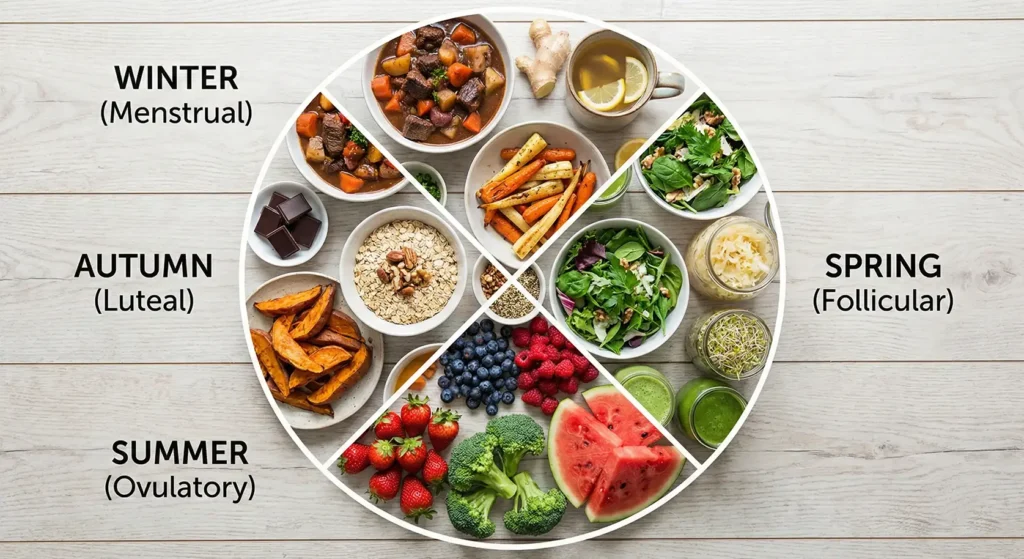
- Phase 1 (Winter): Focus on warmth. Iron-rich stews and soups to replenish lost blood.
- Phase 2 (Spring): Fermented foods (kimchi, yogurt) to help metabolize rising estrogen.
- Phase 3 (Summer): Raw fiber and veggies to support healthy metabolism.
- Phase 4 (Autumn): Complex carbs (sweet potato) to boost dropping serotonin and stop sugar cravings.
1. Menstrual Phase Diet: Replenish & Warm
The Goal: Remineralization and Circulation.
Your body is working hard to release the uterine lining. You are losing Iron and Zinc with every drop of blood. From a Traditional Chinese Medicine (TCM) perspective, this is a “Cold” phase. Eating cold foods (like ice cream or raw smoothies) causes constriction, which equals pain.
- Eat: Warm, cooked, easy-to-digest foods. Bone broth, beef stew, lentils, seaweed (for minerals), and dark leafy greens (cooked, not raw).
- Drink: Ginger tea, raspberry leaf tea, and warm water.
- Avoid: Alcohol, caffeine (which constricts blood vessels), and heavy dairy.
2. Follicular Phase Diet: Fresh & Fermented
The Goal: Gut Support for Estrogen.
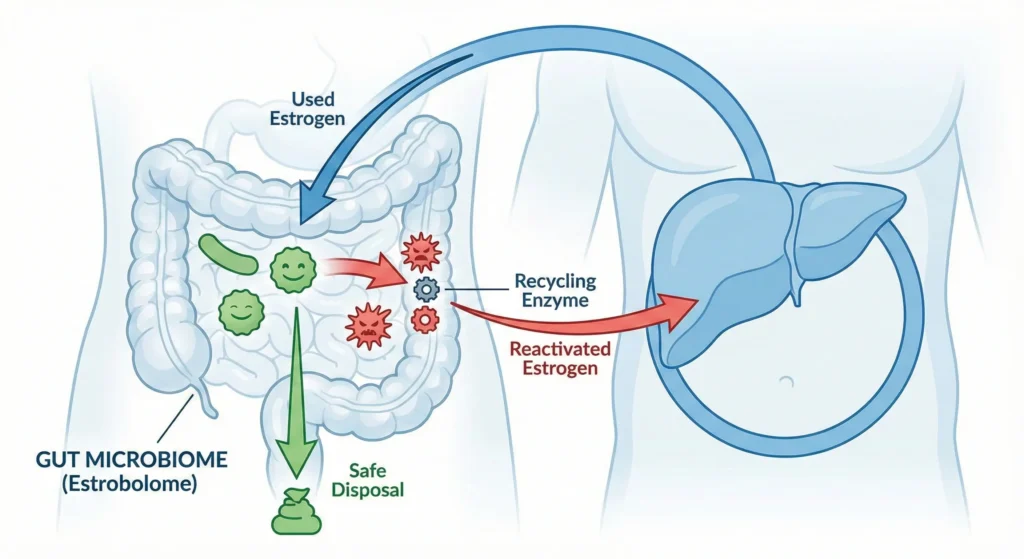
As Estrogen rises, you have more energy. Your digestion is stronger. However, you need to prepare your gut. Estrogen is metabolized in the gut by a specific set of bacteria called the Estrobolome. If your gut is unhealthy, it can disrupt your body’s natural processing, which may leave you feeling sluggish later.
- Eat: Probiotic-rich foods like sauerkraut, kimchi, kefir, and yogurt. Lean proteins like chicken, eggs, and white fish.
- Texture: You can handle fresh, lighter cooking methods like steaming or sautéing.
- Seeds: Flax seeds and pumpkin seeds (rich in Zinc) are great now.
3. Ovulatory Phase Diet: Fiber, Fiber, Fiber
The Goal: Support Natural Elimination.
Estrogen is at its all-time high. Once your body uses it, it needs to be escorted out via bowel movements. If you are constipated during ovulation, this can disrupt your natural rhythm.
- Eat: Raw vegetables! Large salads, smoothies, quinoa, berries, and almonds. Cruciferous veggies (Brussels sprouts, broccoli) are superstars here because they contain DIM, a compound that helps the liver process estrogen.
- Hydration: Drink extra water. You might feel naturally hotter, so cooling foods like cucumber and watermelon are perfect.
4. Luteal Phase Diet: Stabilize the Crash
The Goal: Mood Stability and Curbing Cravings.
This is when the sugar cravings hit. Why? Because your serotonin is dropping, and your body wants a quick fix. But sugar causes an insulin spike, followed by a crash, which makes PMS mood swings worse.
The solution is Complex Carbohydrates. They give you the serotonin boost without the crash.
- Eat: Roasted root vegetables (sweet potatoes, squash, carrots), brown rice, oats, walnuts, and dark chocolate (70%+).
- Magnesium: Critical for preventing cramps. Add spinach, pumpkin seeds, or a supplement.
- Avoid: Excess salt (worsens bloating) and skipped meals. Your metabolism is faster now; you need to eat regularly to keep blood sugar stable.
🔬 For the Science Geeks: The Estrobolome
Your gut health directly dictates your period health. The Estrobolome is a collection of bacteria in the gut capable of metabolizing and modulating the body’s circulating estrogen. If you lack these good bacteria (due to antibiotics or poor diet), an enzyme called beta-glucuronidase can reactivate estrogen that was supposed to be pooped out, sending it back into your bloodstream. This plays a key role in how your body manages hormone levels throughout the month.
🎓 Test Your Knowledge
1. During menstruation (Winter), what type of food should you prioritize?
See Answer
Like soups and stews. Avoid cold smoothies right now.
2. Why are cruciferous veggies (broccoli/kale) good during ovulation?
See Answer
Medical Disclaimer: This content is for informational purposes only and is not a substitute for professional medical advice, diagnosis, or treatment.