
Charter 4 :Menstrual Phase: Pain Management & Deep Restoration
🕒 9 min read | Phase: Inner Winter ❄️
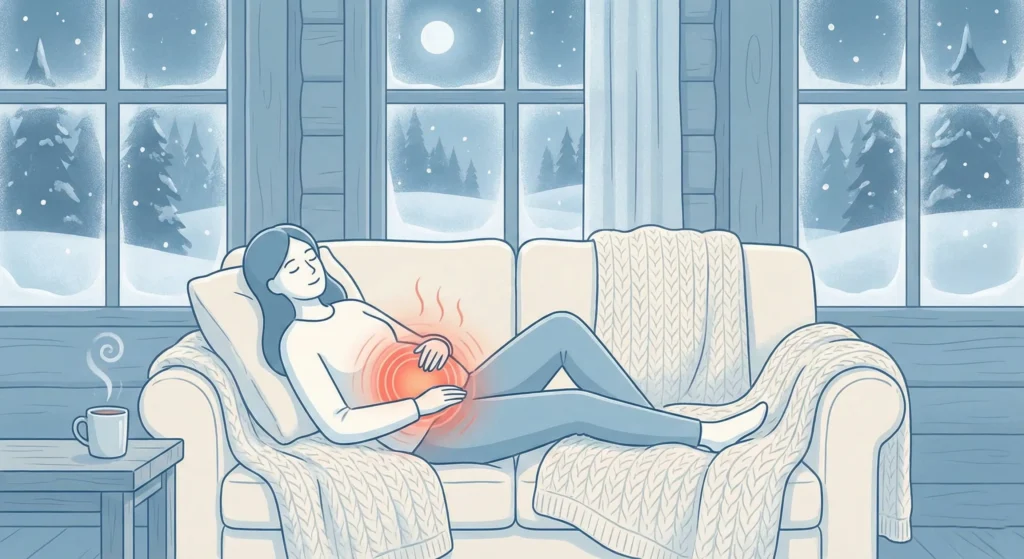
Welcome to your Inner Winter.
In a world that glorifies “hustle culture” and constant productivity, menstruation is an act of rebellion. It is the one time of the month when your body physically demands that you stop.
This phase (Days 1–5 approx.) is not a punishment, nor is it a time to just “push through” the pain with a smile. It is a biological reset button. Your hormones are at their lowest, your lining is shedding, and your energy is turned inward.
In this chapter, we are going to rewrite the script on period pain. We will explain exactly why it hurts (meet the chemical villain), how to use heat as medicine, and why resting now is the secret to having high energy next week.
💡 Key Takeaways
- The Villain: Cramps are caused by inflammatory chemicals called Prostaglandins.
- Heat is Medicine: Heat works by increasing blood flow, which “washes away” these pain chemicals.
- Rest is Productive: Your immune system is slightly suppressed now; sleep is your best defense.
- Food Strategy: Focus on warming, iron-rich foods to replenish what you lose.
1. The Biology: Why Does It Hurt?
Let’s get scientific for a moment. Why does your uterus cramp?
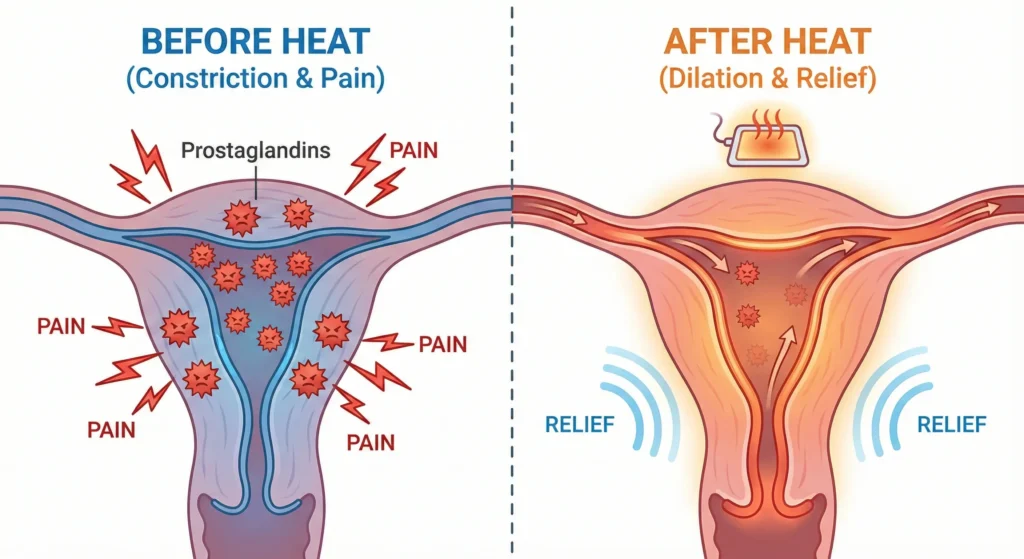
When progesterone levels drop at the end of your cycle, it signals the cells in your uterus to release chemicals called Prostaglandins. These chemicals have one job: to trigger inflammation and muscle contractions. These contractions squeeze the blood vessels in the uterus, temporarily cutting off oxygen supply to the muscle tissue.
Pain = Lack of Oxygen (Ischemia).
It’s similar to the pain you feel during a heart attack or an intense muscle cramp. The higher your prostaglandin levels, the stronger the contractions, and the more painful the cramps.
2. Heat Therapy: Your First Line of Defense
We often reach for painkillers (NSAIDs) first, but heat should be your immediate go-to. Here is why Snnugle focuses on heat:
The Mechanism of Heat:
When you apply heat (like our warmer) to your lower abdomen (approx. 40°C / 104°F), you trigger vasodilation—the widening of blood vessels.
- Oxygen Rush: It restores blood flow and oxygen to the oxygen-starved uterine muscles, instantly relieving that ‘squeezing’ pain.
- Chemical Flush: Increased circulation helps ‘flush out’ the built-up prostaglandins faster, reducing the duration of inflammation.
Think of heat not just as ‘comfort,’ but as a tool that mechanically reverses the cause of the pain (constriction).
3. Radical Rest & Sleep Hygiene
In Traditional Chinese Medicine (TCM), the menstrual phase is a time to protect your ‘Qi’ (energy). You are losing blood, iron, and fluids. This is biologically ‘expensive’ for your body.
Your immune system is actually slightly suppressed during menstruation, making you more susceptible to colds or fatigue. This is why ‘pushing through’ a workout class feels so terrible right now.
- Sleep More: Aim for an extra 30-60 minutes of sleep. Your body is doing heavy lifting internally.
- Low Impact Movement: Walking or Yin Yoga is fine. Heavy lifting or HIIT increases cortisol. Chronic high stress can interfere with overall hormone balance, so prioritize gentle movement to support your recovery right now.
4. Nutrition for ‘Winter’
Your body is losing Iron and Zinc. If you crave a steak or dark chocolate, listen to it.
- Magnesium: Known as ‘nature’s muscle relaxant.’ It helps soothe uterine contractions. Found in dark chocolate, leafy greens, or supplements.
- Warm Foods: In your inner winter, avoid ice water or raw salads. They constrict blood vessels (the opposite of what we want). Opt for warm soups, ginger tea, and stews to support circulation.
🔬 For the Science Geeks: Primary vs. Secondary Dysmenorrhea
Primary Dysmenorrhea is common cramping caused by prostaglandins (what we discussed above). It usually starts with your first periods.
Secondary Dysmenorrhea is pain caused by a disorder in the reproductive organs, such as Endometriosis, Adenomyosis, or Fibroids. If your pain is debilitating, lasts longer than the first 3 days, or doesn’t respond to heat/NSAIDs, this is a red flag to see a doctor. Pain should never be ‘normal’ if it stops you from living your life.
🎓 Test Your Knowledge
1. What is the chemical mainly responsible for period cramps?
See Answer
These inflammatory lipids cause uterine contractions.
2. How does heat help reduce pain?
See Answer
This brings oxygen to the muscles and flushes out pain chemicals.
Medical Disclaimer: This content is for informational purposes only and is not a substitute for professional medical advice, diagnosis, or treatment.